The wearable AI market is being propelled less by marketing than by a genuine technical shift: devices can now fuse data from several physiological sensors at once and use machine learning to turn that combined stream into a single, meaningful health insight. Industry analysts tracking the sector describe intense competition between technology giants and specialized innovators, while market researchers at Market Research Future point to a telehealth market heading toward a valuation of more than 250 billion dollars as a catalyst making wearable devices clinically credible. The rest of this article explains how the technology works, who is competing, and what is actually driving the numbers.
The Rise of Wearable AI: Beyond the Smartphone
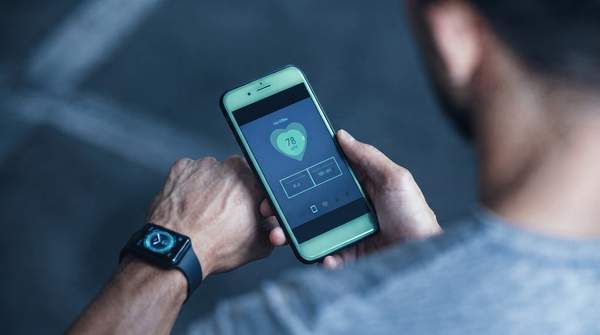
For a decade, wearables were accessories to the smartphone—notifications on your wrist, step counts on your band. What has changed is the sensing and processing capability packed into the device itself. A modern smartwatch is not a small phone; it is a continuous physiological measurement platform that happens to tell time.
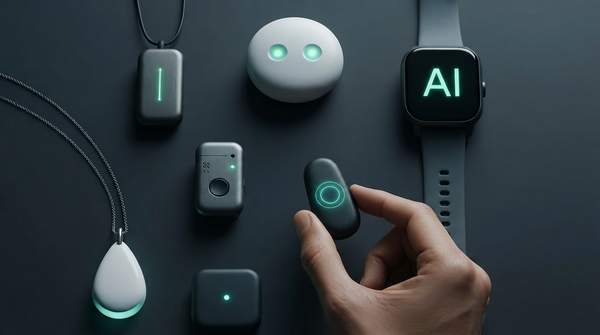
Market analysts frame this as the emergence of a major consumer electronics category in its own right. Grand View Research's healthcare IT team, which tracks the wearable AI market, reports that companies such as Samsung Electronics, Apple, Google, Huawei, Garmin, Sony, Meta, Xiaomi and Fitbit dominate through continuous product innovation, strategic acquisitions and expanding AI-enabled health and fitness capabilities. Their advantages, the analysts note, rest on extensive portfolios, global distribution, and investments in AI, sensors and cloud ecosystems.
The strategic significance is straightforward: the smartphone is a mature, saturated market, while the wrist—and increasingly the face—offers an untapped surface for computing that touches the body. And unlike the phone, the wearable's core value proposition is data the phone cannot collect. That makes health and wellness the center of gravity for the entire category.
Multimodal Sensing: The Technological Core of Wearable AI
The single most important concept for understanding wearable AI is "multimodal sensing." A scientific review of AI-based wearable sensors published in the National Library of Medicine's archive explains it directly: multimodal sensing means combining one physiological signal—say, an electrocardiogram (ECG)—with other physiological and environmental parameters such as electrooculography (EOG, eye movement), electromyography (EMG, muscle activity), temperature, strain and humidity to build a comprehensive health profile. No single sensor tells you much on its own. Heart rate alone is ambiguous; motion alone is ambiguous. Together, interpreted by a model, they become informative.
The review's authors highlight a critical consequence: an artificial neural network (ANN) trained on these combined physiology signatures "could make almost individual differences negligible." In plain terms, AI fusion is what allows a mass-market device to work acceptably across millions of very different bodies—a problem that plagues single-signal approaches.
Consider sleep monitoring, one of the most widely used consumer applications. The review describes how sleep wearables have moved to multi-sensor setups, using accelerometers, heart rate monitors and peripheral oxygen saturation (SpO2) sensors to capture comprehensive sleep-related data, with algorithms then assessing sleep stages, duration and disturbances. The user sees one score in the morning; the device has reconciled three noisy, independent signals to produce it.
How Multimodal Sensing Powers Wearable AI Health Insights
The framework below traces the full pathway—sensor to synthesized insight—for three health applications. This is where the "AI" in wearable AI actually earns its name: at the fusion step, where distinct data streams are reconciled into one judgment no individual sensor could support.
| Application | Sensor Inputs | Data Collected | AI/ML Processing | User Insight |
|---|---|---|---|---|
| Sleep monitoring | Accelerometer, heart rate monitor, SpO2 sensor | Motion, heart rate, blood oxygen levels | Algorithms fuse the multi-sensor streams to infer sleep stages, duration and disturbances | Sleep quality assessment and stage breakdown |
| Comprehensive health profile | ECG, EOG, EMG, temperature, strain and humidity sensors | Cardiac bio-signals, eye and muscle activity, body temperature and environmental context | An ANN synthesizes the combined physiology signatures, largely smoothing individual differences | A holistic physiological profile rather than isolated readings |
| Hydration status (research stage) | Wearable sweat and physiological sensors | Sweat biomarkers and physiological signals during endurance exercise | Machine learning models predict hydration from the combined biomarker data | Hydration status classification |
Two qualifications matter. First, the sleep and health-profile rows reflect capabilities described in a peer-reviewed review of the field, not a specific product's validated accuracy. Second, the hydration row comes from a single-case study by Wang and colleagues, published in IEEE's biomedical informatics journal in 2022, which predicted hydration status using machine learning on physiological and sweat biomarkers during endurance exercise. It demonstrates the method works in principle at research scale; it does not establish that consumer hydration tracking is shipping reliably today. The direction of travel, however, is clear: as sensors multiply and models improve, the fusion layer—not any single sensor—becomes the product.
Key Players and Competitive Strategies in Wearable AI
Market Research Future's analysts, Nirmit Biswas and Garvit Vyas, describe a landscape led by Apple, Samsung and Google, each pursuing a distinct path. Apple continues to innovate with its Apple Watch series, focusing on health features and seamless integration with its ecosystem. Samsung emphasizes its Galaxy Wearable line, leveraging its strong presence in the smartphone market to drive wearable adoption—effectively using its handset install base as a distribution channel.
The broader field is deeper than the top three. Grand View Research's team adds Huawei, Garmin, Sony, Meta, Xiaomi and Fitbit to the dominant group, competing through acquisitions and expanding health capabilities, while flagging rising regulatory scrutiny and rapid technological change as forces that demand sustained R&D investment. Regulation, in other words, is both a moat for incumbents with compliance resources and a brake on unverified health claims.
Looking further out, an independent strategy analysis published on the Corporate Strategy Cheat Sheet blog reports that Apple is pursuing a measured, two-phase evolution known as "Project Atlas": display-less smart glasses focused on audio, photography and AI environmental sensing starting in 2026–2027, with true augmented-reality glasses expected after 2028. The same analysis describes an overhauled, agentic Siri slated for spring 2026. Because this comes from a single blog analysis with unnamed authorship, it should be read as informed speculation about Apple's roadmap rather than confirmed company policy—but it illustrates where the leading player's thinking reportedly sits: sensing the environment, not just the body.
Driving Forces: Fueling Wearable AI Market Growth
Three forces are converging on the same market. The first is investment. Biswas and Vyas report a marked increase in investment in wearable technology, with venture capitalists and tech companies recognizing AI-driven wearables' potential to transform healthcare, fitness and entertainment. Capital is not just chasing gadgets; it is chasing the health-data pipeline those gadgets create.
The second is telehealth. The same researchers point to projections that the telehealth market will exceed 250 billion dollars in valuation in the coming years, positioning wearables to play a pivotal role in that transformation and enhancing the credibility and utility of wearable AI devices in the healthcare sector. A device that continuously monitors sleep, heart rhythm and activity is a natural data source for remote care—provided its measurements are trustworthy.
The third is consumer demand. Both market reports identify health and fitness monitoring as the central demand driver behind the competitive intensity, with continuous innovation in AI-enabled health capabilities cited as the primary differentiator companies are racing to build. Notably, the evidence here describes global dynamics; the specific regional adoption patterns some industry commentary attributes to rising health awareness in Asia were not established in the passages underpinning this analysis and should not be taken as settled.
The Future Trajectory of Wearable AI
Connect the threads and a coherent picture emerges. Multimodal sensing gives devices genuine clinical-grade breadth of measurement; AI fusion gives them the ability to make that breadth intelligible to ordinary users; telehealth growth and heavy investment give the category economic gravity; and entrenched giants with health-and-ecosystem strategies give it competitive intensity. The technology, the money and the demand are aligned—an unusual configuration in consumer electronics.
The honest caveats: consumer wearables are not medical devices by default, regulatory scrutiny is rising, and some of the most ambitious sensing—like sweat-biomarker hydration tracking—remains at the research case-study stage. The gap between a useful wellness signal and a clinically actionable measurement is where much of the coming competition, and regulation, will concentrate.
For companies and investors weighing the space, the decision the evidence supports is this: invest in or develop wearable AI solutions focusing on multimodal health sensing for sustained market relevance. The measurable indicator to watch is continued growth in market size and adoption rates for wearable AI devices, particularly those offering advanced health monitoring features, as reported by market research firms. If multimodal sensing is genuinely the engine of this category, that growth—and the share of it captured by health-focused devices—will be the testable proof.
Sources
- Wearable AI Market Size, Share — Market Research Future
- Wearable AI Market Size, Share & Trends Report, 2026-2033 — Grandviewresearch
- The Emergence of AI-Based Wearable Sensors for Digital Health Technology: A Review - PMC
- Race for AI Wearables Leadership – Analysing the AI Wearables Strategies of Meta, Apple, Google, Samsung, and Amazon — Corporate Strategy Cheat Sheet