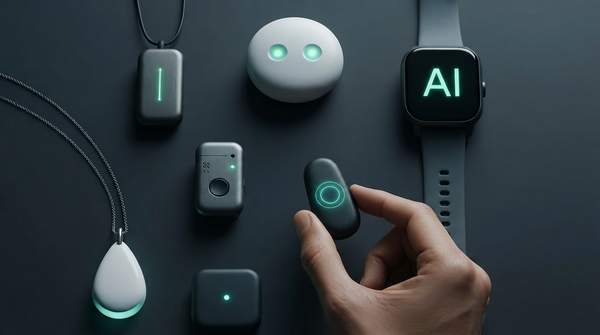
Display-free AI devices are not smartphones with the screen removed. They are a distinct product category built on three interlocking pillars: a dedicated physical object, a voice-first interaction model, and on-device processing that keeps data local. Understanding how those pillars combine—and what user problems they target—is the framework any enthusiast or hardware investor needs before betting on the category.
Introduction to Display-Free AI Devices
The category has a short, bruising history. Trend reporting by Ellen Smith on Trend Hunter frames the current wave—exemplified by Nothing's stripped-back design—as a test of whether AI interactions need their own object rather than another phone feature. Earlier dedicated devices such as the Humane Ai Pin and Rabbit R1, Smith notes, struggled to prove that case. What makes the current trend stand out, in her analysis, is a shift toward minimal, screenless companions that create space for ambient assistants, reducing visual overload while moving value toward context capture, privacy cues, and seamless spoken workflows.
That framing matters because it defines the category by intent rather than by any single product. A display-free AI device is defined by what it refuses to be: a general-purpose touchscreen computer. The three pillars below explain how that refusal becomes a coherent design philosophy rather than a limitation.