
All Stories

How to Tell a Good AI Benchmark from a Bad One: A Practical Checklist
Many AI performance claims rely on benchmarks that lack systematic quality checks, statistical significance, and replicability, leading to unreliable decision-making. This article introduces a practical checklist derived from the BetterBench project to help users critically assess AI benchmark quality and identify potential pitfalls.

Five Decisions That Decide Your Seed or Series A: A Founder's Readiness Framework
This framework details the five key decisions founders must make to assess their readiness for Seed vs. Series A funding. It highlights how investor expectations shift from team quality and learning velocity at seed to demonstrated results and product-market fit at Series A.

Venture Debt for Startups: A Founder's Decision Framework for Timing, Terms, and Traps
Venture debt offers startups capital to extend runway or fund growth, but it's only suitable for post-Series A companies with proven product-market fit and institutional backing. Founders must carefully evaluate terms like warrants, covenants, and fees to avoid common pitfalls and ensure it amplifies a working growth engine, not a struggling one.

Pre-seed vs. Seed vs. Series A: How Founders Can Tell Which Round They're Actually Raising
Founders often mislabel their funding round, leading to costly mistakes. This guide clarifies the key differences between pre-seed, seed, and Series A rounds, detailing typical check sizes, what each stage requires founders to prove, and the common investor types involved.

The Mechanics Behind MT. Zion Moving & Storage's Full-Service Residential Moving Services
Understanding how MT. Zion's full-service moving works is key to a stress-free relocation. For homeowners in the Tampa Bay area, navigating the complexities of packing, loading, and transporting an entire household can b…
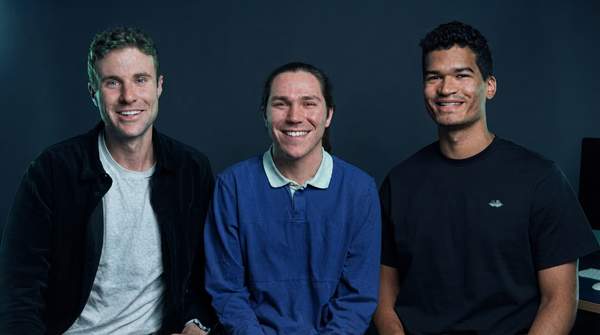
Five Factors That Decide U.S. Market Fit for Health Tech Startups
Entering the U.S. market for health tech startups is primarily a strategy question, not a technology one. Investors and partners prioritize a coherent go-to-market plan, including regulatory pathway, reimbursement rationale, and channel strategy, over the underlying product.

Quantum Annealing vs. Gate-Based Quantum Computing: Why Energy Minimization and Sequential Logic Lead to Different Machines
Quantum annealing and gate-based quantum computing are fundamentally different architectures, distinguished by their core principles of energy minimization versus sequential logic. Understanding this distinction is key to aligning specific enterprise problems with the appropriate quantum computing approach.

Grants, Revenue-Based Financing, or Venture Debt: Matching Non-Dilutive Capital to Your Startup's Stage
Discover how grants, revenue-based financing (RBF), and venture debt offer non-dilutive capital options for startups. The article guides founders in matching the right funding type to their company's stage, revenue predictability, and strategic goals to extend runway without premature equity dilution.

Amazon Rebrands Fire Tablets to 'Alexa,' Unveils New Color Kindles and Ring Lock
Amazon has rebranded its Fire tablets to the premium "Alexa Tablet" line, introducing new color Kindles and a Ring Smart Lock, while also shifting to a rolling hardware announcement strategy.

Is Dr. Gina Nick's Private Advisory Worth It for High-Achievers in 2026?
Dr. Gina Nick's Radiant Health Advisory offers personalized wellness guidance for high-achieving professionals, focusing on interpreting health information and developing intentional wellness strategies. This guide explores the program's services, membership levels, and considerations for prospective clients.

Why Single-Photon Detectors Decide the Fate of Photonic Quantum Computing
Single-photon detectors are the core components where computation becomes visible in photonic quantum computers, dictating their performance and scalability. The field balances high-fidelity cryogenic SNSPDs against more scalable, room-temperature SPADs, with ongoing innovation aiming to bridge their performance gaps.

Homomorphic Encryption for AI: The Trade-Off Between Privacy and Performance
Homomorphic encryption enables computations on encrypted data for secure AI inference, but it introduces significant performance overhead. Organizations must carefully evaluate this trade-off against alternatives like secure enclaves to balance privacy needs with operational demands.

Forbion Secures €2.3 Billion for Biotech Investment, Countering European Capital Shortage
Venture capital firm Forbion has raised €2.3 billion for two new investment funds, marking its largest fundraise to date and injecting substantial capital into the European life sciences sector. This significant move aims to support approximately 30 high-potential biotech companies and counter the persistent funding challenges in the region.

Physical AI in Industry: The Five-Layer Stack Behind the New Automated Workforce
Physical AI, artificial intelligence that acts on the physical world, is transforming industry through a five-layer technology stack enabling intelligent robots for complex tasks. This evolution impacts manufacturing and logistics, creating new roles and requiring workforce adaptation.

5 Ways ProfileNest's AI Relationship Manager (NestBot) Turns Connections Into Opportunities
ProfileNest's AI Relationship Manager, NestBot, helps professionals transform their dormant contact lists into valuable opportunities. It bridges the gap between making connections and converting them into conversations, referrals, and deals.

Apple Reportedly Taps LG for Smart Home Overhaul to Challenge Amazon and Google
Apple is reportedly collaborating with LG Electronics to develop a new range of smart home devices, aiming to revitalize its HomeKit platform and directly challenge the market dominance of Amazon and Google in the connected home space.

Alexa+, 4K Cameras, and Android: Decoding Amazon's New Hardware Strategy
Amazon's latest hardware strategy focuses on integrating enhanced AI with Alexa+, advanced sensory hardware like 4K cameras, and a significant software pivot for tablets to Android, aiming to create a more connected and personalized smart home experience.

The Quantum Leap in Measurement: How Atomic-Scale Sensors Are Changing Industries
Quantum sensors, leveraging atomic-scale quantum phenomena like quantized energy levels and spin, are revolutionizing measurement with unprecedented precision and sensitivity. This leap beyond classical technology is driving disruptive applications in fields from biomedicine to fundamental science.

FDA Rules for AI Medical Devices: A Founder's Guide to SaMD, CDS, and Model Updates
For health tech founders, navigating FDA regulations for AI medical devices is a critical business function. Understanding the distinction between SaMD and CDS, and planning for AI model evolution with PCCPs, is key to product development and market strategy.

Can "Muscle Mastery" Reverse Aging? Inside Dr. Nick Poulios’ Scientific Fitness Philosophy
Dr. Nick Poulios' book, "Muscle Mastery," explores strength training, nutrition, and physiology as foundations for lifelong fitness and healthy aging, encouraging readers to understand their bodies for sustained well-being. It emphasizes scientific understanding and active participation in health, clarifying that its approach supports a healthier life rather than reversing biological aging.

The Essential Features of Shadow AI Detection Tools
Shadow AI, the unapproved use of AI tools by employees, poses significant cybersecurity risks. Effective detection requires tools with continuous discovery, data monitoring, identity governance, and risk analysis capabilities.

Edge vs. Cloud AI: The Architectural Trade-Offs Shaping Consumer Gadgets
A fundamental shift is moving AI computation from cloud data centers directly onto consumer gadgets, enabling faster, more private, and reliable devices through Edge AI. This architectural choice creates significant trade-offs in latency, privacy, power consumption, and connectivity for product developers.
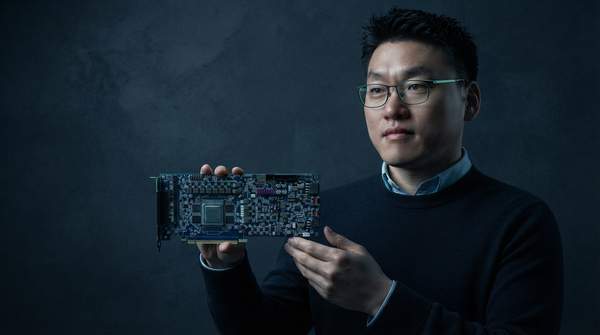
Inside the Engine Room: The Key Factors Driving South Korea's Deep-Tech Boom
South Korea's deep-tech sector is rapidly expanding, fueled by a coordinated ecosystem where government initiatives, corporate engagement, and academic talent work in concert. This structured approach, exemplified by programs like TIPS and Open Innovation, guides startups from early-stage R&D through to global scaling.

A Founder's Guide to Alternative Startup Funding
Early-stage startups can explore alternative funding sources like government grants, crowdfunding, and revenue-based financing to secure capital while managing equity dilution and founder control. Choosing the right option requires a careful assessment of your business model and long-term vision.