Photonic quantum computers do not read their answers with transistors or gates—they read them by detecting individual photons. That makes the single-photon detector, not a peripheral sensor, the component where computation actually becomes visible. Today the field splits between two technologies: superconducting nanowire single-photon detectors (SNSPDs), which deliver the best numbers but demand cryogenic cooling, and semiconductor avalanche photodiodes (SPADs), which run at room temperature and scale more easily but perform worse on every key metric.
The Indispensable Role of Single-Photon Detectors in Quantum Computing
Photonic quantum computers encode quantum information in photons, which serve as qubits and travel and compute largely at room temperature. As Jeff Shepard explains at Design World, these machines are a form of measurement-based quantum computing: instead of applying sequences of quantum gates, computation relies on local measurements of a highly entangled cluster state. Every one of those measurements is a single-photon detection event.
This is why detectors sit at the heart of the architecture rather than at its edge. NIST's overview of quantum computing platforms notes that devices such as beamsplitters and single-photon detectors are used to control and measure the encoded quantum states in photonic systems. A review published in Photonics likewise describes the detection and manipulation of single photons as essential to quantum information science, including quantum computing. No detector, no measurement; no measurement, no computation.
Key Performance Metrics for Single-Photon Detectors
Three specifications dominate any detector's usefulness. The first is detection efficiency: the probability that an arriving photon actually registers. In a machine whose output is a pattern of detected photons, every missed photon is lost information, so efficiency translates directly into computational fidelity.
The second is noise, usually quoted as the dark count rate—detections that occur with no photon present. False detections corrupt the measurement record, which is why dark counts below 1 Hz matter so much in quantum settings. The third is timing precision, or jitter, together with recovery time (dead time), which determines how closely spaced photons can be distinguished and how fast a system can run. RP Photonics' encyclopedia, authored by Dr. Rüdiger Paschotta, lists these alongside count rate as the defining performance features of single-photon detectors.
Superconducting Nanowire Single-Photon Detectors (SNSPDs): High Performance at Cryogenic Temperatures
An SNSPD is a narrow superconducting wire held just below its transition temperature. When a single photon is absorbed, a tiny hot spot forms and the wire momentarily becomes resistive, producing a fast voltage pulse. That pulse is the detection event—amplified, timed, and counted.
The performance is exceptional. According to Paschotta, SNSPDs achieve high detection efficiencies across a wide wavelength range—including the telecom-relevant 1310 and 1550 nm bands, sometimes above 80%—with very low dark counts, short dead times of 10–20 nanoseconds, and timing jitter in the tens of picoseconds. Industry analysis from IDTechEx reports that most commercial SNSPD products exceed 90% detector efficiency with dark count rates below 1 Hz.
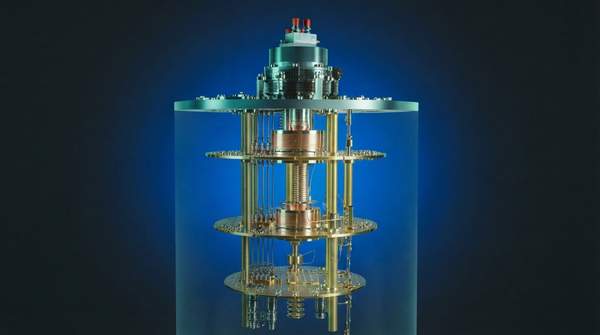
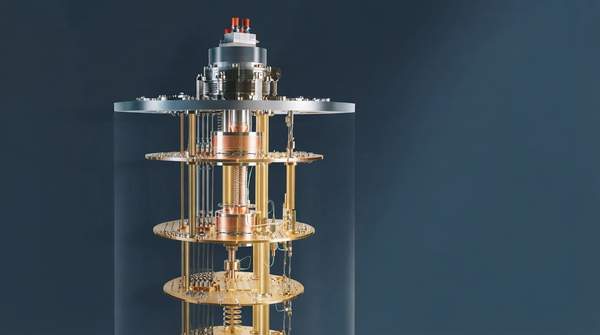
The catch is temperature. SNSPDs must be cooled to very low temperatures, typically below 4 K, which requires bulky, expensive, power-hungry cryostats. As the comparison at Embedded puts it, that high cost and complexity is a major barrier to wide adoption, even though the cooling itself suppresses background noise and helps produce the very numbers that make SNSPDs attractive.
Avalanche Photodiodes (SPADs): Room-Temperature Potential and Scalability
SPADs take the opposite approach. These semiconductor diodes are biased above breakdown so that a single absorbed photon triggers an avalanche of carriers—a self-amplifying pulse that needs no cryogenics. The trade-off is performance: IDTechEx reports SPAD efficiencies of roughly 10–30% with dark count rates often above 100 Hz, and Embedded's comparison notes SPAD dark counts ranging from 100 Hz and beyond.
What SPADs give up in fidelity, they gain in practicality. Because they operate at room temperature, they need no sophisticated cooling and are more feasible in commercial products. A particularly significant development reported by Shepard is a normal-incidence germanium-silicon (GeSi) SPAD operating at 300 K, built with silicon-on-insulator and germanium-on-silicon technologies for CMOS fabrication compatibility and optimized for integration with photonic integrated circuits. Notably, this waveguide GeSi SPAD at 300 K performed as well as an SNSPD at 4 K—though that result is specific to this waveguide-integrated device, not SPADs in general.
Comparing SNSPDs and SPADs: Performance Trade-offs
Setting the two technologies side by side makes the central trade-off explicit: SNSPDs buy fidelity with cryogenics, while SPADs buy scalability with lower performance.
| Dimension | SNSPD | SPAD (e.g., GeSi) |
|---|---|---|
| Operating principle | Superconducting nanowire becomes momentarily resistive upon photon absorption, producing a fast voltage pulse | Semiconductor diode biased above breakdown; a single photon triggers an avalanche of carriers |
| Operating temperature | Cryogenic, typically below 4 K, requiring bulky and power-hungry cryostats | Room temperature (a GeSi SPAD demonstrated at 300 K); no sophisticated cooling needed |
| Detection efficiency | Often above 90% for commercial products; sometimes above 80% across a wide wavelength range including 1310/1550 nm | Roughly 10–30% for SPADs generally; the waveguide GeSi SPAD at 300 K performed as well as an SNSPD at 4 K |
| Dark count rate | Very low, typically below 1 Hz for most commercial products | Generally higher, often above 100 Hz |
| Timing jitter and recovery | Low jitter (tens of picoseconds) and short dead time (10–20 ns) | Not consistently reported across the evidence for SPADs generally |
| Key trade-offs | Ultra-high performance at the cost of cryogenic cooling, high cost, and complexity—barriers to wide adoption | Room-temperature operation, CMOS compatibility, and better scalability, despite generally lower efficiency and higher noise |
The pattern in the table is consistent across sources: on efficiency, noise, and timing, the superconducting device wins; on integration and operating overhead, the semiconductor wins. Neither dominates the other, which is why both lines of development continue in parallel.
Advancing Quantum Computing Through Detector Innovation
The choice between SNSPDs and SPADs for photonic quantum computing depends on the specific application's balance between fidelity requirements and scalability needs, with ongoing research aiming to improve both. A lab chasing maximum measurement fidelity in a measurement-based photonic machine will accept the cryostat; a team building integrated, room-temperature photonic circuits will trade some efficiency and noise for CMOS-compatible scalability.
The measurable indicator to watch is twofold: improvements in room-temperature SPAD performance—detection efficiency and dark count rate moving toward SNSPD territory, as the waveguide GeSi result hints is possible—and progress integrating SNSPDs into scalable photonic chips. Whichever technology closes its gap first will shape how quickly photonic quantum computers can grow.