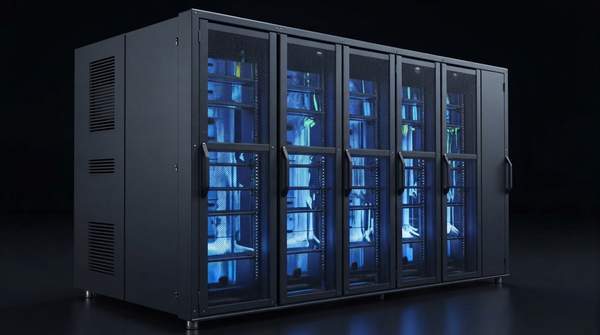
IIT Kanpur has announced plans for a ₹200 crore High-Performance Computing facility equipped with advanced GPUs, designed to power research in artificial intelligence and scientific simulation. The facility is the computing centerpiece of the institute's newly launched "Greater Than Us" campaign, a US$1 billion fundraising effort announced in October 2026 with ₹4,155 crore already committed. It is a planned project, not a confirmed operational system.
IIT Kanpur's ₹200 Crore HPC Facility: A Leap for Deep-Tech Research
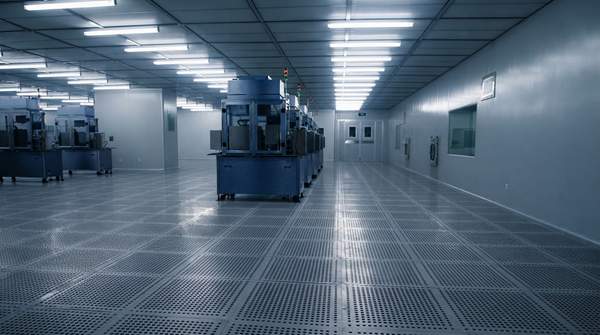
The announcement, made through the institute's own campaign launch, positions the HPC facility within a wider infrastructure build-out. The Foundation pillar of the campaign carries a ₹5,000 crore goal, and its centerpiece is a ₹524 crore Central Research Facility giving researchers shared access to high-end equipment. The HPC facility sits alongside a ₹160 crore semiconductor and device processing centre with a clean room, plus advanced spectroscopy and microscopy centres.
News coverage of the launch, including reporting by Nation Path India, frames the plan as a bid to strengthen India's research capabilities and translate laboratory discoveries into practical technologies and commercial ventures. The campaign itself targets US$1 billion by March 2029, giving the computing investment a defined fundraising horizon even though no construction or launch timeline for the facility has been given.
The 'Greater Than Us' Campaign: A Foundation for Innovation
"Greater Than Us" is described by IIT Kanpur as the largest campaign by any IIT. It rests on three pillars: Foundation, Talent and Frontier. The HPC facility belongs squarely to Foundation, the pillar charged with building the research and institutional infrastructure for the institute's next phase of growth.
The Talent pillar centers on the Gautam School of Innovation & Entrepreneurship (G-SINE), which will train founders for India's high-growth sectors — AI, cybersecurity, digital health, biotech, drones and advanced manufacturing — and launch in July 2027 with a flagship MBA in Technology & Entrepreneurship. G-SINE will work alongside a proposed Deep Tech Hub at the Noida campus and draw on SIIC, the institute's incubator, which has incubated 571 startups. The campaign's stated logic is blunt: "The next deep-tech companies will start in a lab, not a garage."
GPU-Powered Computing for AI and Scientific Simulation
The facility's defining technical commitment is its GPU-based architecture. IIT Kanpur states the advanced GPUs will "power research in AI and scientific simulation," and Analytics India Magazine's coverage of the campaign confirms the same pairing: advanced graphics processing units supporting AI research and scientific simulations.
That dual purpose matters. AI research, particularly deep learning, depends on the parallel processing GPUs provide, while scientific simulation — the modeling of physical, chemical and biological systems — is the other classic workload of high-performance computing. By pairing the two, the institute is buying general-purpose computational depth rather than a single-domain machine. The specific GPU models have not been disclosed, and no comparison to other HPC facilities is possible from the announcement.
Accelerating Key Deep-Tech Sectors
The evidence directly links the HPC facility to AI and scientific simulation, and the broader campaign names the deep-tech fields it intends to accelerate. Quantum technologies, semiconductors and cybersecurity are identified as priority areas for investment and research, alongside planned facilities including a Quantum Technology Centre — described as the first in the country to bring quantum hardware and software development together — and a Centre of Excellence for Semiconductor Packaging.
The campaign also plans a facility for prototyping and testing medical devices, noting that India imports 80% of its high-end medical devices. Furthermore, a drug discovery program is envisioned, focusing on cancer, metabolic, and neurodegenerative diseases. Digital health, biotech, drones and advanced manufacturing appear as high-growth sectors for G-SINE's founders. The announcement does not explicitly state that the HPC facility directly powers all of these fields; the direct, stated link runs to AI, simulation, quantum technologies, semiconductors and cybersecurity.
Why HPC is Essential for Deep-Tech Innovation
The strategic case rests on a straightforward premise: the fields the campaign targets — AI, quantum technologies, semiconductors, cybersecurity — are computationally hungry. They rely on large-scale data processing, modeling and simulation, which is precisely what a GPU-based HPC facility supplies. The institute's own framing makes the connection explicit by naming AI and scientific simulation as the facility's purpose while listing these same domains as its research priorities.
IIT Kanpur's leadership argument is national, not just institutional. As the campaign puts it, "India cannot borrow the technologies that will define its future. We have to build them." The HPC facility is the computational substrate for that ambition — the shared resource meant to let researchers and, through G-SINE, student founders work at frontier scale.
IIT Kanpur's HPC Facility: Strategic Role in Deep-Tech Innovation
The table below maps the ₹200 crore investment from its place in the campaign's structure to the research areas it is designed to accelerate, distinguishing what the announcement states directly from what the broader campaign targets.
| Dimension | Detail | Status and scope |
|---|---|---|
| Campaign pillar | Foundation, one of three pillars (with Talent and Frontier); Foundation goal ₹5,000 crore | Part of the US$1 billion campaign targeting March 2029 |
| Infrastructure investment | ₹200 crore High-Performance Computing facility | Planned project, not yet operational; no timeline given |
| Technical capability | Advanced GPUs for AI research and scientific simulation | Specific GPU models not disclosed |
| Directly supported areas | AI, scientific simulation; campaign priority areas include quantum technologies, semiconductors, cybersecurity | Stated purpose of the facility and campaign priorities |
| Adjacent campaign sectors | Digital health, biotech, drones, advanced manufacturing (G-SINE); medical devices prototyping facility | Part of broader campaign goals; direct HPC link not explicitly stated |
Implications for India's Deep-Tech Future
IIT Kanpur's planned ₹200 crore HPC facility represents a significant strategic investment to bolster India's capabilities in advanced AI and deep-tech research, positioning the institute as a key driver of future technological innovation. The decision is a plan, not a delivered capability: its value depends on the campaign reaching its US$1 billion target by March 2029 and on the facility moving from announcement to operation.
The measurable indicator to watch is future announcements from IIT Kanpur regarding the progress of the HPC facility's construction, its operational status, or specific research outcomes enabled by its capabilities. The nearest dated milestone in the same campaign is G-SINE's launch in July 2027, which will signal whether the talent pipeline meant to exploit this computational infrastructure is arriving on schedule.
Sources
- IIT Kanpur Plans ₹200 Crore High-Performance Computing Facility to Expand AI and Deep-Tech Research — Nation Path India
- IIT Kanpur Launches ‘Greater Than Us’, the Largest Campaign by Any IIT,… — IIT Kanpur Launches ‘Greater Than Us’, the Largest Campaign by Any IIT, to Raise US$1 Billion; ₹4,155 Crore Already Committed | IIT Kanpur
- AIM — India's Leading AI & Data Science Media Platform — Analyticsindiamag