For years, the power of artificial intelligence in consumer gadgets was synonymous with a constant connection to the cloud. But a fundamental architectural shift is underway, moving AI computation from distant data centers directly onto the devices in our hands and homes. This approach, known as Edge AI, processes data locally, enabling a new generation of gadgets that are faster, more private, and more reliable by design. The key difference lies in where the processing happens, a choice that creates significant trade-offs in latency, privacy, power consumption, and connectivity for product developers and engineers.
Unlike cloud-based AI, which relies on centralized servers for complex analysis and model training, Edge AI runs lightweight models directly on devices like smartwatches, cameras, and speakers. This on-device processing allows gadgets to make intelligent decisions in real time, without the delay of sending data back and forth over a network. According to Arm, a key designer of chip architectures, consumer devices increasingly demand immediate response, long battery life, and dependable operation regardless of internet access—outcomes that running AI directly on the device makes possible. This shift empowers technology to be more intuitive, personal, and secure.
Edge AI vs. Cloud AI: A Decision Framework for Consumer Gadgets
For developers and product strategists, choosing between an on-device or cloud-based AI architecture involves a series of critical trade-offs. The decision impacts everything from user experience and data security to hardware cost and battery life. While many modern systems use a hybrid approach—performing real-time tasks on the edge while using the cloud for large-scale training—understanding the distinct characteristics of each architecture is essential. The following framework compares the two approaches across key dimensions relevant to consumer product design, offering a clear guide for mapping technical choices to user benefits.
| Dimension | On-Device Edge AI | Cloud-Based AI |
|---|---|---|
| Processing Location | AI computations and decision-making occur directly on the device, close to the data source. | Data is transmitted to remote, centralized data centers where AI computations are performed. |
| Latency | Significantly reduced latency, with on-device inference operating in milliseconds for real-time responses. | Network round-trips introduce latency, which can range from hundreds of milliseconds to seconds. |
| Data Privacy | Enhanced by design, as sensitive data like audio or images can be processed without leaving the device. | Data must be transmitted over a network, increasing its exposure and requiring robust security for data in transit and at rest. |
| Connectivity Dependence | Enables full or partial functionality without a constant internet connection, improving reliability. | Requires a continuous and stable internet connection for all AI processing; performance is tied to network quality. |
Latency: Real-time Responsiveness for Critical Interactions
The most immediate user-facing benefit of Edge AI is its dramatic reduction in latency. By processing data at its source, on-device AI eliminates the round-trip delay inherent in cloud computing. According to the Edge AI Foundation, on-device inference operates in milliseconds, compared to the hundreds of milliseconds or even seconds required for a cloud-based system. This difference is not merely an incremental improvement; for many applications, it determines whether a feature is useful or "too slow to matter." For time-sensitive functions like hazard alerts from a home security camera or fall detection from a wearable device, this swift, local processing is essential.
This near-instantaneous response transforms the user experience. Consider a voice command given to a smart assistant. With Edge AI, the recognition and action can feel immediate because the audio is processed locally. In a cloud-dependent model, the same command must travel to a server, be processed, and have the result sent back, introducing a noticeable pause. This "swift processing," as product development firm Design 1st describes it, is a core reason for adopting Edge AI in consumer electronics, making interactions feel more natural and seamless.
Privacy and Security: Keeping Sensitive Data Local
As consumer gadgets collect increasingly personal data, privacy has become a paramount design concern. Edge AI offers a powerful architectural solution by minimizing data transmission. When AI models run locally, raw sensor data—such as audio from a voice command or video from a security camera—does not need to leave the home or device. The Edge AI Foundation notes that this local inference model provides "stronger privacy." This approach inherently reduces the risk of data breaches during transmission and limits the amount of personal information stored on third-party servers, a benefit that technology company Micron highlights as a key advantage of processing data locally.
This principle of data minimization is central to building user trust. Instead of sending a continuous stream of personal data to the cloud for analysis, the device can process it internally and only transmit anonymized or essential results. According to technology provider Synopsys, a key application for Edge AI in consumer devices is its ability to personalize behavior while preserving privacy. A device can learn a user's habits and preferences over time, adapting its functionality without ever exposing the underlying behavioral data to an external server, thereby making the technology more intuitive and user-centric by design.
Connectivity and Power: Enabling Offline and Efficient Operation
Edge AI decouples a device's intelligence from its internet connection. This allows gadgets to perform AI-powered tasks reliably even with limited or no network access, a capability that is crucial for mobile devices that move through areas of varying connectivity. This offline operation is a key advantage noted by innovation analyst Nadejda Alkhaldi. It ensures that a smart device remains smart even when the Wi-Fi is down. According to David Civera of STMicroelectronics, processing data locally will bring AI-enabled applications to new areas, expanding functionality beyond the reach of consistent, high-speed internet.
Furthermore, by reducing the need to constantly send data to the cloud, Edge AI helps conserve battery life. Data transmission over wireless radios is one of the most power-intensive operations for a mobile device. Minimizing this traffic directly contributes to the longer battery life that consumers demand. Arm identifies this efficiency as a critical outcome of on-device AI, enabling higher performance with lower power consumption. This focus on efficiency allows for the creation of powerful yet long-lasting wearables, smart home sensors, and other portable gadgets.
Next-Generation Features Powered by Edge AI in Consumer Gadgets
The architectural benefits of on-device processing are not just theoretical; they directly enable specific, advanced features that are defining the next wave of consumer technology. By leveraging low latency, enhanced privacy, and offline capabilities, developers are creating more intuitive and personalized user experiences that were previously impractical with a cloud-only approach.
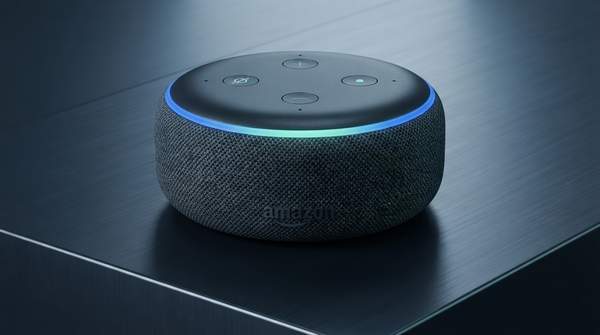
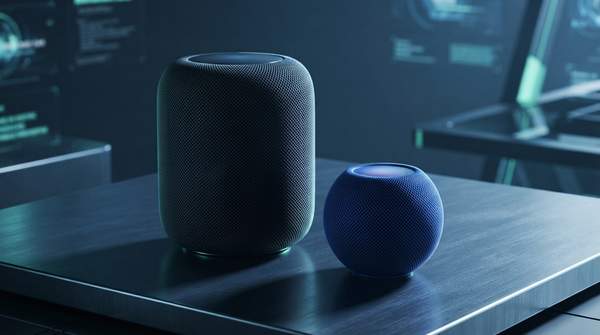
One of the clearest examples is in smart speakers and phones. According to an analysis by NextComputing, on-device AI allows these gadgets to handle voice recognition locally. Instead of sending sensitive audio clips to a remote server, compact machine learning models interpret commands directly on the device. This not only enhances privacy but also boosts responsiveness, making voice assistants react faster and more reliably, even with a spotty internet connection. The result is a more natural and immediate interaction, where the device understands and acts without perceptible delay.
In the health and wellness sector, Edge AI is enabling proactive monitoring. According to Synopsys, wearables can use on-device AI to monitor vital signs and instantly alert caregivers to potential issues. The millisecond-level latency is critical in these time-sensitive situations, where waiting for a cloud server to respond could have serious consequences. This same principle of local processing allows devices to personalize user experiences—such as a fitness tracker providing real-time coaching based on a user's form—while keeping that sensitive health and behavioral data private and secure on the device itself.
Designing for the Edge: Key Takeaways for Consumer Gadgets
The shift toward on-device processing presents a clear choice for product developers. Product developers should prioritize Edge AI for consumer gadgets requiring real-time responsiveness, enhanced data privacy, and reliable offline functionality. While the cloud remains indispensable for training large, complex AI models and aggregating anonymized data for broader insights, the inference and decision-making for immediate, personal interactions are increasingly moving to the edge. For product teams, this means rethinking the balance between on-device and cloud resources to build more resilient, secure, and responsive products that earn user trust.
The observable signal for successful implementation will be user feedback indicating seamless, instant interactions and a high degree of personalization without noticeable network dependency. As consumers come to expect this level of performance and privacy as standard, the architectural decisions made today will define the market leaders of tomorrow, distinguishing products that are merely connected from those that are truly intelligent.
Sources
- Edge AI for consumer devices: fast, efficient on-device AI — Arm | The Architecture for the Digital World
- Navigating Edge AI for Physical Products - Design 1st
- Smart Homes Weren't Smart. Edge AI Changes That. - EDGE AI FOUNDATION
- Edge AI — MICRON
- What is Edge AI? – How it Works — Synopsys
- What Is Edge AI? Bringing Intelligence Closer to Where It's Needed — TDWI
- Living on the Edge: How edge AI is powering faster, smarter and safer technology - The ST Blog
- How to Use Edge AI — NextComputing - Purpose-Built Computer Solutions