The single most useful question an enterprise can ask about quantum computing is not "how many qubits?" but "what kind of problem am I trying to solve?" Today's commercially accessible quantum machines divide into two broad camps, and the dividing line maps cleanly onto business needs. Quantum annealers, exemplified by D-Wave, are built primarily for optimization: scheduling, routing, portfolio construction and similar problems that involve finding a best option among many possibilities. Gate-based machines, offered through cloud platforms such as Amazon Braket by providers including IonQ, Rigetti, QuEra and IQM, are the versatile path, aimed at simulation of quantum systems with applications in materials science, drug discovery and machine learning. This article lays out both camps, the platforms that serve them, and a framework for matching one to your own R&D agenda.
Understanding Quantum Computing Architectures for Business
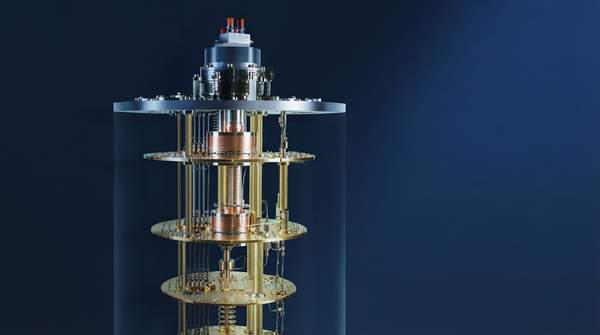
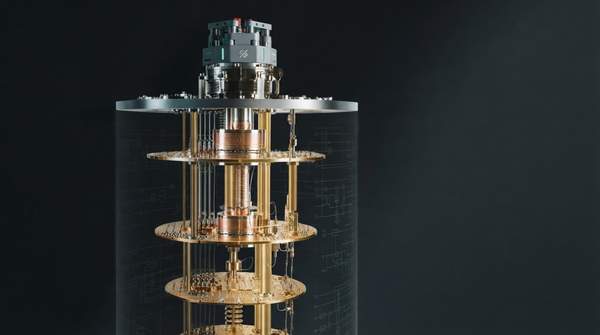
The quantum hardware market is not a single technology race. It is several parallel races, each with distinct engineering trade-offs. A technical survey by photonic quantum company Quandela lays out the main contenders side by side: superconducting systems, which operate near absolute zero and offer fast gate operation times; trapped-ion systems, which boast readout fidelity above 99.9 percent and uninterrupted connectivity between qubits; photonic systems, which run at room temperature and naturally resist decoherence; and neutral-atom systems, which offer all-to-all connectivity and, per the same comparison, have scaled to 256 atoms in the largest available system.
For a business strategist, these characteristics matter less as specifications than as signals of suitability. A fast-gate, near-zero-temperature superconducting machine suggests one deployment profile; a room-temperature photonic machine with long-distance state preservation suggests another. But the more consequential split for procurement sits above these modality differences: whether the machine computes by annealing or by gates. That choice determines which problem classes are even reachable, and how your team writes software.
Quantum Annealing: Solving Optimization Challenges
Quantum annealing is the outlier in the commercial landscape, and deliberately so. A developer-focused platform comparison by Varsity, an educational blog run on behalf of CEP IIT Delhi, notes that D-Wave's hardware "uses quantum annealing rather than the gate model," which "makes it particularly relevant to optimisation problems, such as scheduling, routing and other problems that can be formulated for annealing or D-Wave's hybrid solvers."
D-Wave, founded in 1999 and publicly traded, pioneered this approach. Industry tracker The Quantum Insider, in a survey of major quantum companies, describes D-Wave as a full-stack company offering both quantum hardware and cloud-based software tools "to solve complex optimization problems across industries like finance, life sciences, materials science, and AI/ML." Its LEAP platform provides real-time cloud access to its quantum systems, the Ocean software development kit, and hybrid solvers that combine classical and quantum resources.
The practical draw is the problem shape, not the physics. Optimization means searching for the best configuration among a vast space of possibilities, and annealing hardware is designed around exactly that task. A logistics team wrestling with vehicle routing, a manufacturer balancing production schedules, or a finance team constructing portfolios can often express their problem in the form an annealer accepts. The same comparison notes that D-Wave has advertised a three-month free trial through its Quantum LaunchPad programme for qualified participants, lowering the entry cost for a first feasibility study. One caveat: an annealer is not a general-purpose computer, and as the comparison points out, you cannot simply take a gate-model circuit and run it on a D-Wave machine.
Gate-Based Quantum Computing: Enabling Simulation and Discovery
Most of the rest of the market computes with gates. In gate-model quantum computing, a program is a sequence of quantum gates applied to qubits, much as a classical program is a sequence of logic operations. The modality varies beneath that common principle: superconducting circuits, trapped ions manipulated by lasers, neutral atoms held by optical tweezers, and photon-based approaches all implement the same computational model with different engineering trade-offs.
The application frontier for gate-based machines is simulation. D-Wave itself, describing its own expansion into gate-model systems on its learning portal, states that this second platform "will unlock new capabilities in the simulation of quantum systems, with applications in materials science and drug discovery." That framing is notable: the company built on annealing sees gate-based hardware as the route to problems its annealers do not address.
Materials science and chemistry are natural fits because quantum systems are what these machines natively represent. Rather than approximating molecular behavior on classical hardware, a gate-based quantum computer can, in principle, model quantum interactions directly. BlueQubit, in its survey of quantum software platforms, groups gate-based applications around such complex simulations and heavy data processing, including machine learning. A software analysis from Quantum Zeitgeist adds an ecosystem observation: the dominant quantum software stacks, including Qiskit, Cirq, PennyLane and Q#, are all built around remote QPU calls, making the cloud the standard programming model.
Commercial Platforms and Cloud Access
Here the strategic picture simplifies. There are hardware vendors, and there are cloud access layers, and enterprises typically reach quantum hardware through the second. The Varsity comparison makes the distinction explicit: IBM, IonQ, Rigetti, Quantinuum and D-Wave sell their own machines, while "Amazon Braket and Azure Quantum let you reach hardware from multiple providers through one cloud environment." AWS currently lists QPUs from AQT, IonQ, IQM, QuEra and Rigetti, a roster that spans trapped-ion, superconducting and neutral-atom technologies.
This aggregation is the cloud platforms' core value for R&D teams. Rather than committing to one vendor's architecture, a company can prototype against several, comparing how the same problem behaves on different hardware. BlueQubit describes Amazon Braket as a fully managed service that lets users develop and test quantum algorithms, simulate quantum computations and run experiments on different hardware technologies, while cautioning that its features are scattered across the wider AWS ecosystem. Quantum Zeitgeist argues that benchmarking across multiple modalities has become "the dominant procurement question, and only the cloud providers can offer that breadth."
D-Wave's LEAP occupies a different position: it is a vendor's own cloud, tuned to its annealing and hybrid solvers rather than a multi-vendor marketplace. Teams choosing D-Wave get depth in one architecture plus the Ocean SDK; teams choosing Braket or Azure Quantum get breadth across architectures. The specific providers available on any cloud may change over time, so a procurement plan should verify current rosters before committing.
Quantum Computing Platform Suitability Matrix for Industry R&D
The matrix below synthesizes the documented characteristics, platforms and application targets of each architectural camp. Read it by column: identify your problem class first, then trace left to the architecture and platforms that serve it. Its reasoning path is straightforward: annealing hardware is purpose-built for optimization, so optimization-first industries align with D-Wave's ecosystem; gate-based hardware spans multiple modalities and targets simulation, so simulation-first industries align with the multi-vendor clouds.
| Hardware Architecture | Key Characteristics | Example Commercial Platforms | Target Industry Applications |
|---|---|---|---|
| Quantum annealing | Purpose-built for optimization: scheduling, routing, and similar problems that involve finding an optimal solution among many possibilities | D-Wave LEAP, with the Ocean SDK and hybrid solvers; three-month free trial advertised for qualified participants | Optimization in finance, logistics and scheduling; D-Wave also cites life sciences, materials science and AI/ML use cases |
| Gate-based (superconducting) | Fast gate operations; operates near absolute zero; fabricated much like semiconductors; D-Wave is also developing gate-model superconducting systems with dual-rail qubits | D-Wave gate-model program; Rigetti and IQM available via Amazon Braket | Simulation of quantum systems, with applications in materials science and drug discovery |
| Gate-based (trapped ion) | Readout fidelity above 99.9%; uninterrupted connectivity between qubits; long-lasting quantum states; laser-controlled confined ions | IonQ, Quantinuum, and AQT hardware, accessible via Amazon Braket | Simulation-heavy research and advanced development workflows |
| Gate-based (neutral atom) | All-to-all connectivity; expandable to thousands of atoms; largest available system reported at 256 atoms; controlled by optical tweezers | QuEra hardware, accessible via Amazon Braket | Large-scale simulation and research problems |
| Gate-based (photonic) | Operates at room temperature; natural resistance to decoherence; maintains quantum states over long distances | Modality documented in Quandela's technical comparison; multi-vendor cloud access varies by platform | Simulation and network-oriented quantum applications |
Two boundaries on this matrix deserve emphasis. It is not an exhaustive catalogue of quantum companies, and it deliberately avoids qubit counts and error rates as selection criteria, since those figures change constantly while the architectural fit between a technology and a problem class is far more durable. Nor does it name a single winner: a logistics company's answer and a pharmaceutical company's answer should legitimately differ.
Strategic Decision: Aligning Quantum Technology with Business Problems
The decision rule this evidence supports is concrete: evaluate potential quantum computing platforms by first categorizing your R&D problem as either primarily optimization or simulation-focused, then matching it to the most suitable hardware architecture and its accessible commercial platforms. An optimization-first portfolio, in logistics or scheduling or financial selection, points toward annealing and D-Wave's LEAP ecosystem with its Ocean SDK and hybrid solvers. A simulation-first portfolio, in materials science or drug discovery, points toward gate-based hardware reached through Amazon Braket or Azure Quantum, where one environment gives you IonQ's trapped ions, Rigetti's superconducting circuits and QuEra's neutral atoms to compare.
The measurable indicator of success is equally concrete: a clear alignment between the identified R&D problem type, optimization or simulation, and the chosen quantum hardware architecture and platform in initial pilot projects or feasibility studies. D-Wave's advertised trial period and the pay-as-you-go structure of cloud access make such pilots a low-commitment first step. What to watch next is whether your chosen architecture's platform roster and tooling still match that problem-type alignment when the pilot reports its first results.
Sources
- Quantum Computing Companies in 2026 (76 Major Players) — The Quantum Insider
- Quantum Cloud Computing in 2026: Comparing The Best Platforms for Developers - Varsity Blog
- Top Quantum Cloud Providers 2026 — Quantum Zeitgeist
- Quantum Computing Applications — Dwavequantum
- Exploring Types of Quantum Computers: Which Technology Leads? — Quandela
- Top 9 Quantum Computing Software Platforms — Bluequbit