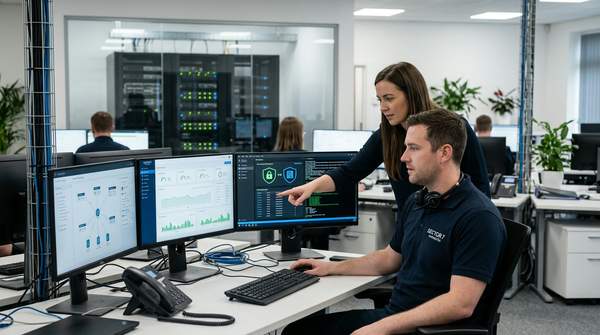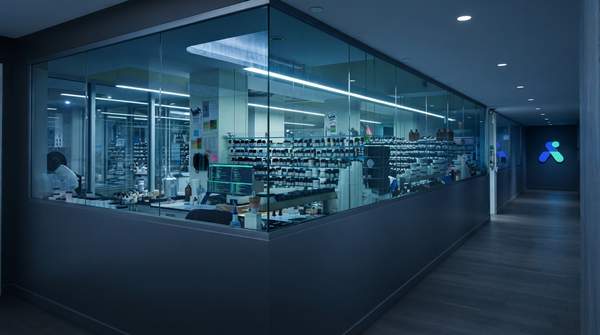
Artificial intelligence has moved into one of the least likely corners of consumer goods: the perfume laboratory. Estée Lauder opened an AI-driven perfume innovation centre in Paris in 2025, Givaudan has deployed an AI formulation tool called Carto, and Symrise built a system named Phylra to help its perfumers invent. The common thread is not automation of scent itself, but of the staggering complexity around it, from regulatory checks across more than a thousand ingredients to the trial-and-error search for molecules with exactly the right properties.
AI's Scent Revolution: Overcoming Perfume's "Nasal Paradoxes"
The industry's own vocabulary captures the problem. Lucas Nanini, Estée Lauder's vice president for fragrance innovation, calls these challenges "paradoxes": contradictory requirements that a formula must satisfy at once. "How can we create an oil that is rich, yet fine enough to be diffused?" he asked, describing the kind of question his Paris centre now attacks with AI rather than years of manual trial and error.
The stakes are commercial, not academic. Estée Lauder's fragrance portfolio includes Jo Malone London, Kilian Paris, Le Labo and Tom Ford Beauty — brands Nanini describes as billion-dollar businesses. His centre pairs what he calls the mixing of savoir faire with cutting-edge technology, and he tests new AI-uncovered formulas on visitors to the Maison des Parfums. The paradoxes AI resolves are the ones that previously slowed or blocked launches entirely.
Stage 1: AI-Driven Ingredient Discovery and Optimization
The earliest and least visible stage where AI intervenes is the raw materials themselves. Atinary, a maker of self-driving-lab technology, sells an AI platform for cosmetics and fragrance R&D that applies intelligent multi-parameter screening to ingredient discovery and formulation optimization. Its algorithms range from multi-objective formulation optimization to transfer learning across fragrance and ingredient families, supported by autonomous agents that draw on expert knowledge and past data.
AI also substitutes for ingredients that are disappearing for ethical reasons. Civet, traditionally taken from the glands of African civet cats to give perfume a musky tone, has been phased out amid animal-rights protests; AI can be used to find molecules that reproduce its effect. Regulatory compliance is another target. Nanini told AFP that checking whether each of the more than one thousand ingredients in a perfume is legal in a specific country, and at what maximum concentration, once took enormous time; with a single click, AI now verifies it.
Stage 2: AI in Scent Formulation and Creative Acceleration
Formulation is where AI meets the craft itself. Givaudan's Carto, launched alongside the opening of its Digital Factory in Paris, uses AI to help perfumers achieve what the company calls better results than ever before. Yann Vasnier, a fine fragrance perfumer at Givaudan, described it as "a futuristic complement to our ancient craft allowing us to experiment with formulas more easily and effectively," adding that the tool lets perfumers "create more freely."
Symrise's Phylra takes a different creative angle. As one Symrise perfumer explained, Phylra can examine the styles of the hundreds of perfumers employed across the company's history, compare their similarities and differences, and come up with novel creations — exploration that no single human could perform across such a large body of work. Osmo, an outside player, has built an Olfactory Intelligence platform that digitizes scents: by mapping molecules and predicting scent profiles, it transforms abstract prompts like images or text into precise fragrance formulas.
AI in Perfumery: A Three-Stage Model
Read as a whole, the evidence organizes into a simple framework: AI enters the perfume value chain at three distinct points, with different tools and different human relationships at each.
| Stage | What AI does | Company / technology |
|---|---|---|
| Ingredient discovery & optimization | Finds substitute molecules (e.g., for animal-derived civet), suggests complementary ingredients, and checks legality and maximum concentrations of 1,000+ ingredients per country with a single click | Estée Lauder's Paris innovation centre; Atinary SDLabs (multi-objective optimization, transfer learning) |
| Formulation & creativity | Speeds cost calculation, lets perfumers experiment with formulas more freely, and mines historical perfumer styles for novel combinations; Osmo's platform digitizes scents and predicts profiles from molecular maps | Givaudan Carto; Symrise Phylra; Osmo's Olfactory Intelligence platform |
| Consumer personalization | Translates questionnaires and voice conversations into tailored recommendations or full fragrance formulations | Lylo (1,200+ raw materials, two recommendations per questionnaire); Amazon's Fragrance Lab on Amazon Bedrock with Nova 2 Sonic speech AI |
The sequencing matters: each stage feeds the next. Discovery tools widen the palette available to formulation tools; formulation outputs become the bases that consumer-facing systems assemble or recommend. The model also separates back-end laboratory functions, largely invisible to shoppers, from front-end tools designed as public experiences.
Stage 3: Consumer Personalization and Custom Fragrance Creation
The most visible applications are consumer-facing. At VivaTech 2026, Le Studio des Parfums collaborated with Amazon on The Fragrance Lab, where visitors answered on-screen questions and then held a natural voice conversation powered by Nova 2 Sonic, Amazon's proprietary speech model, running on Amazon Bedrock. The system translated the collected input into a coherent fragrance formulation — though at the event, the actual assembly of perfumes from the bases was still done the old-fashioned way, with pipettes.
Lylo, a separate tool showcased at the same event, simplifies understanding of the more than 1,200 raw materials used in perfumery: from a short questionnaire covering lifestyle and olfactory preferences, it generates two tailored fragrance recommendations. Reporting from the event described start-ups leveraging AI to let users customize perfumes with a few taps, reflecting their personality, tastes and emotions — personalization pushed to the individual level that mass retail never offered.
The Human-AI Partnership: Intuition Meets Algorithm
What AI does not do is smell. Industry voices are explicit about the boundary. Scento's editorial team, surveying the field, notes that while AI can suggest innovative molecular combinations and unexpected accords, it lacks the ability to truly perceive scents or understand the emotions they evoke, and it depends on historical data. Jacques Cavallier-Belletrud, master perfumer for Louis Vuitton, put the practical shift bluntly: "Thirty years ago, calculating a perfume's cost took 10 to 15 minutes by hand. AI changes all that."
The consensus across companies is that AI serves as a stimulant and a data processor, not a replacement. Symrise's Apel, who also teaches perfume history, framed the moment as the field's next great leap — the last being synthetic molecules in the late 19th century — and said innovation in perfumery typically moves at a "glacial pace." "Artificial intelligence is the next stage and great innovation in perfumery," he said, emphasizing exploration of new frontiers over cost and time. Human perfumers remain the final arbiters, supplying the intuition and emotional judgment that algorithms cannot.
The Future Scent: AI-Augmented Creation
The perfume industry is undergoing a fundamental shift toward AI-augmented development: companies that want to compete on speed, compliance and personalization must integrate computational tools into R&D while keeping human perfumers at the creative center. The pattern across Estée Lauder, Givaudan, Symrise and Amazon is consistent — AI absorbs the data-heavy work of discovery, compliance and matching, and humans retain the sensory and emotional judgment that defines the finished product.
For readers tracking whether this shift is real or rhetorical, the measure is concrete: watch for increased market presence of AI-assisted fragrance launches and continued investment in AI R&D by the major fragrance houses. Amazon's own showcase ended on an unresolved question — whether the company will automate olfactory assembly itself. How that gap between generated formulations and physical production closes is the industry's next milestone.
Sources
- AI helps cosmetic giants overcome perfume's nasal 'paradoxes' — AFP.com
- Artificial intelligence is quietly disrupting the fragrance development process — Glossy
- AI Platform for Formulation: Cosmetics, Flavors and Fragrances — Atinary – Enables Self-Driving Labs® technology
- The new AI tool that represents the future of fragrance formulations — Givaudan
- Perfume and AI: The innovations that stole the show at VivaTech 2026 — Premium Beauty News
- Fragrance Development: AI Cuts Costs by Up to 50% — Scento