A medical technology startup can make extraordinary progress and still leave its founder with difficult questions. Technical performance, funding, regulatory progress, and market growth may all move forward while responsibility becomes harder to divide among patients, colleagues, investors, and the people closest to the person building the company.
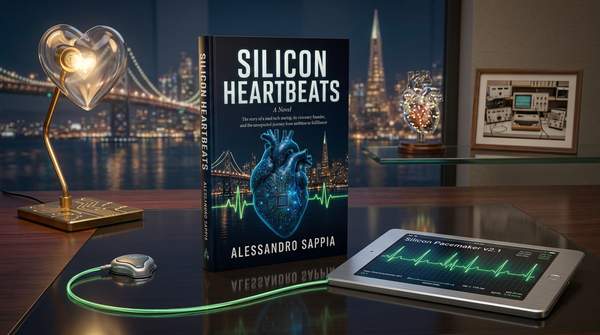
That tension runs through Silicon Heartbeats, Alessandro Sappia’s literary novel about Alex Mercer and Vitanova, the artificial intelligence-powered medical diagnostics startup he builds in Silicon Valley. The novel places innovation inside a field where technological ambition carries ethical weight because the work is intended to affect healthcare decisions.
A Medical Mission Makes Responsibility Personal
Alex’s work begins with diagnostic error. After witnessing a devastating medical mistake and seeing his grandmother narrowly survive a misdiagnosis, he becomes determined to pursue a technology-based response through Vitanova.
That origin gives the company a moral purpose before funding, growth, or professional status enter the picture. Alex wants the technology to address a problem he has already seen affect someone he loves, tying the company’s mission closely to his sense of responsibility.
The medical setting raises the stakes around later decisions. Technology developed for diagnosis enters a field where evidence, reliability, professional trust, and consequences for patients carry substantial weight.
Sappia uses that environment to make innovation consequential without turning the novel into a technical argument about AI. Vitanova gives Alex something meaningful to pursue while exposing him to responsibilities that grow along with the company.
Building Something Useful Creates New Obligations
Belief in Vitanova’s mission cannot carry the startup by itself. Alex still has to secure funding, develop the technology, move through validation and regulatory pressures, build hospital relationships, and lead the people working alongside him.
Each stage changes the kind of judgment required. Investors have expectations, technical teams need direction, medical partners need reasons to trust the work, and professional relationships can be affected by decisions made under pressure.
The ethical questions in Silicon Heartbeats therefore emerge through concrete choices about priorities, leadership, trust, and responsibility. As Vitanova becomes larger than Alex’s original idea, the consequences of his decisions can spread further than they did when the company was only an ambition.
That growth makes the founder role especially useful for the story. Alex gains greater power to pursue the mission he believes in while also becoming responsible for more people, commitments, and competing interests.
Innovation Can Pull Several Responsibilities in Different Directions
Vitanova’s medical purpose gives Alex a responsibility to pursue the technology carefully, but that is only one obligation surrounding the company. He also has commitments to colleagues, investors, personal relationships, and the mission that originally convinced him the work was worth doing.
For a time, those interests can reinforce one another. Progress can advance the medical goal, strengthen the company, and reward the people who contributed to its development.
Growth also creates moments when the interests stop lining up neatly. A decision that protects Vitanova may strain a relationship, while personal conflict can affect leadership and professional roles inside the startup.
Sappia gives those competing claims enough weight to keep the ethical tension complicated. The question becomes less about choosing innovation or restraint and more about deciding which responsibility should lead when several legitimate obligations demand attention at once.
Medical AI Gives the Choices Wider Consequences
Artificial intelligence expands what Vitanova hopes to accomplish. Because the company works in diagnostic medicine, technological progress carries potential consequences beyond the startup, placing Alex’s ambitions inside a healthcare environment shaped by evidence, implementation, and institutional trust.
That possibility makes the work compelling. A founder who believes better technology could address a serious diagnostic problem has a strong reason to keep pushing through difficult development, funding, and regulatory work.
It also makes judgment more demanding. Professional competence can move the product forward, but it cannot settle every question involving loyalty, trust, leadership, or what Alex owes the people affected by his decisions.
Silicon Heartbeats uses those pressures as literary material rather than turning them into a policy lecture. Medical AI provides the stakes, while the people around Vitanova determine how responsibility is interpreted and acted upon.
Pressure Reveals What a Founder Prioritizes
Sappia has described his interest in technology through the people building it under pressure. That perspective gives Silicon Heartbeats an ethical framework rooted in behavior rather than abstract declarations.
Pressure forces choices. Limited time, company growth, professional demands, and personal relationships repeatedly require Alex to decide which obligation receives his attention first and which consequences he is prepared to accept.
Those decisions reveal more than a statement of principles could. Alex can believe sincerely in Vitanova’s mission while making choices that look different from the perspective of a colleague or someone close to him.
The situation remains recognizable even without specialist knowledge of artificial intelligence. Meaningful work can create genuine obligations while still competing with other responsibilities that deserve serious consideration.
Fiction Can Follow a Decision Beyond the Meeting Room
Discussions of AI ethics often concentrate on capabilities, risks, rules, or governance. Fiction can remain with the people making a decision and then follow how its consequences develop across professional and personal relationships.
Silicon Heartbeats uses that advantage by keeping Alex’s work and private life close together. The same people may occupy several roles in his world, allowing a leadership decision to carry emotional consequences long after its immediate business purpose has passed.
The novel can also revisit choices over time. A decision that appears necessary in one moment may look different after Vitanova grows, relationships change, or Alex’s priorities shift.
That longer perspective gives the ethics of the story their weight. Responsibility is not resolved by one correct answer; it develops through the accumulation of choices and the lives shaped by them.
The Technology Matters Because the Decisions Matter
Vitanova gives Silicon Heartbeats its technological stakes, while the novel keeps responsibility attached to the people creating and using that technology. AI opens possibilities, but founders, colleagues, institutions, and relationships determine how those possibilities enter the world.
The med-tech setting makes those choices unusually consequential without requiring the book to become technical. You can follow the pressure around Vitanova without understanding machine-learning architecture because the central conflicts involve judgment, ambition, leadership, loyalty, and trust.
That combination gives Silicon Heartbeats a specific place within contemporary technology fiction. Its medical AI premise creates a serious professional mission, and its founder story asks what responsible ambition looks like when several forms of responsibility arrive at once.
Frequently Asked Questions
How does Silicon Heartbeats approach AI ethics?
Silicon Heartbeats approaches AI ethics through the decisions surrounding Vitanova, Alex Mercer’s fictional medical diagnostics startup. The novel connects technological ambition with responsibilities involving healthcare, colleagues, relationships, leadership, and the mission Alex believes he is pursuing.
Does Silicon Heartbeats take an anti-AI position?
No. Silicon Heartbeats treats artificial intelligence as a meaningful technology capable of supporting an ambitious medical mission. Its ethical tension develops through the choices people make while building and leading that technology rather than treating AI itself as the villain.
Why is medical technology important in Silicon Heartbeats?
Medical technology gives Silicon Heartbeats a setting where innovation carries serious professional and ethical consequences. Vitanova’s diagnostic mission places Alex’s ambitions alongside questions of evidence, responsibility, trust, and the effects of decisions made around healthcare technology.
Do you need to understand AI to read Silicon Heartbeats?
No. Silicon Heartbeats is written for a general literary audience and requires no background in artificial intelligence or medicine. Its technical setting gives the story specificity, while the main conflicts develop through character, leadership, relationships, and responsibility.
Responsibility Gives the Innovation Its Weight
The ethical questions in Silicon Heartbeats work because Vitanova’s mission is worth caring about. Alex is pursuing technology around a serious medical problem, which makes the competing responsibilities created by that ambition harder to reduce to simple answers.
Readers interested in the ideas behind that intersection can read Alessandro Sappia’s author perspective on technology, AI, medicine, pressure, and the people responsible for what gets built next.